


Wart removal is a popular procedure in modern clinics.Its essence is the extraction of pathological cells from healthy tissues.Wart removal methods are varied, and the choice depends on several factors: the size of the tumor, its location, the number of growths and the personal preferences of the doctor and the patient.
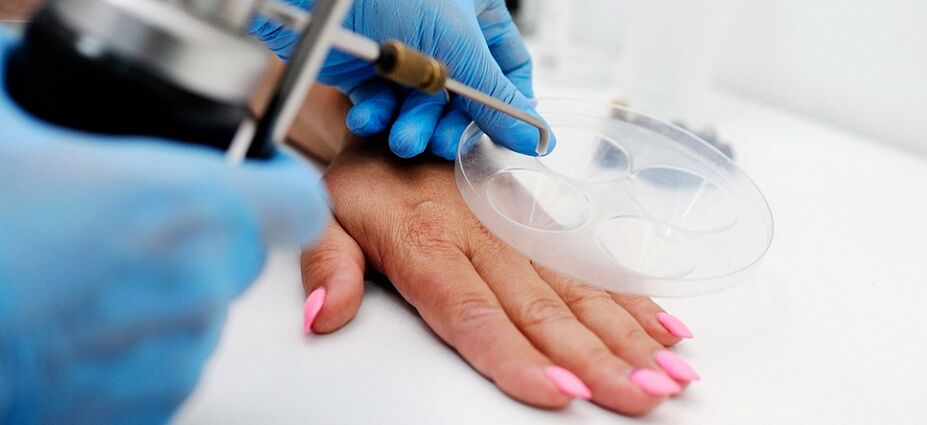
Today, the most popular methods for removing warts are:
- Laser;
- Radio wave;
- Removal with liquid nitrogen;
- Electrocoagulation;
- Traditional surgery.
The use of one or another method of wart removal (cryodestruction, electrocoagulation, laser exposure, surgical excision) depends on the size of the formation and the patient's personal preferences.
All methods, except surgical ones, do not require special preparation.Blood tests for clotting, infections, etc.are necessary only before scalpel excision of the wart.
Laser removal of warts
Laser removal is the most popular way to get rid of skin tumors.Its advantage is speed, absence of scars, minimal risk of infection and other complications.The method is suitable for removing small warts, although it is also used for large tumors.For example, it is difficult without a laser when you need to remove a wart on the face or another open part of the body.Healthy tissues are not affected by the laser destruction of warts.No cuts are made on the skin, the method is completely non-contact.
The laser beam gently cauterizes the blood vessels surrounding the nipple.Bacteria are killed during the procedure.Recovery takes no more than a week.Swelling, bleeding, infection and other complications are excluded.If necessary, warts remaining after tissue removal can be sent for histology, as they are not completely destroyed.
The procedure is simple and anesthesia can be used.The patient is positioned on the couch and the laser device is directed at the nipple.After that, a beam is fired that vaporizes part of the tumor tissue in a fraction of a second.After a few seconds of such exposure, the procedure ends, but if the wart is very large, it must be removed in several stages.This is the main disadvantage - if a course of procedures is necessary, the patient spends a lot of personal time and pays for several sessions.
Removal of warts by the method of radio waves
This is the gentlest technique and is also the most suitable for small warts.High-frequency waves enable the removal of pathological tissues by literally vaporizing them, which makes this method similar to laser destruction.The trace left on the skin is practically invisible, so the use of radio waves is possible even on the face.
Advantages of this method also include:
- Painless;
- Quick recovery;
- Minimal complications and side effects;
- Removal of bacteria during the procedure;
- No need for complex care;
- Possibility of histological analysis.
The disadvantage is that radio wave surgery is not suitable for particularly large warts.
Removal of warts with liquid nitrogen
Cryodestruction is a contact method for removing warts.Its advantages are low price, speed of procedure and good results.The method is suitable for removal on any part of the body, but is rarely used when working with the face - small traces are possible.Negative side: sometimes there is pain during and after the procedure.
The liquid nitrogen removal process is simple.The patient is positioned or sits on a couch in the operating room, and the area of exposure is treated with an antiseptic.The doctor dips a cotton swab or a special instrument into liquid nitrogen.Its temperature is below -195.75°C.After that, the doctor brings the stick to the nipple and touches it.Tissues quickly freeze and collapse - cells burst due to the expansion of frozen water.The remaining tissue is removed and the wound is treated.
Electrocoagulation of nipples
This method is also suitable for most parts of the body, including the face.Before the operation, it is necessary to use local anesthesia and treat the skin with an antiseptic.Removal is performed using an electrocoagulator - a special device that heats the tissue with high-frequency electric current.The loop of the device touches the tumor and gently cuts it off, while simultaneously cauterizing the surrounding blood vessels and destroying bacteria.Loop temperature 800°C.After exposure, a thin crust forms, which falls off within a few days, leaving behind a small pink spot.
The advantages of the procedure are the short time required, the possibility of removing several warts in one session (if they are located close to each other), and large warts can be removed.Bleeding and infection are excluded during and after surgery.When removing small warts, no traces remain.
The downside is that it cannot be used for plantar warts.They are very rough and localized in a too thick layer of skin.In such situations, more intensive types of influence are used.
Surgical removal of warts
Today, this is the most effective way to remove warts, as it guarantees the elimination of all pathological tissues.However, it is used only in extreme cases, when the warts are very large or keep recurring.
5 stages of work:
- Treatment of the area with an antiseptic solution;
- Careful scalpel cuts around the tumor;
- Removing its body with tweezers from the surrounding healthy tissues;
- Surgical wound treatment;
- Placement of sutures and bandages.
The rare use of this method is due to the scars that remain after suturing.In addition, there is a risk of infection, inflammation, swelling and bleeding in the case of large postoperative wounds.However, for large, old warts, this is the only way to get rid of them.In case of urgent need, surgical removal is performed even on the face.
A dermatologist and a surgeon will help you choose a method for wart removal during a preliminary consultation.Most often the choice is:
- For small warts on the face and other parts of the body - laser, electrocoagulation, cryodestructive, radio wave removal;
- For particularly large warts on the face and body, plantar warts - surgical, laser, radio wave;
- For multiples that are not on the sole - laser;radio wave, liquid nitrogen removal;
- For small plants - laser.
Sometimes the choice depends on the patient's general state of health, age, and even the type of activity (for some professions, the presence of scars on the face or neck is unacceptable).In the latter case, only expensive laser removal is possible.In other situations, an individual approach is used.